"Jesus Christ is the same yesterday, today, and forever" (Heb 13:8)
Sunday, 29 June 2014
First Holy Communion, Not Chocolate
Today is one of the most joyful of all of the days in the parish year, and for the children here making your First Holy Communion it should rank as one of the biggest days not just of this year but of your life. So I'd like, this morning, to say some words directly to the children making their First Holy communion, and then to their parents.
So, children: today is your special day. And I want you to try and answer a question that Fr Tom Smith of Warminster put to his First Holy Communion children last week, and I wonder if you can find a better answer than they did. The question is this:
Why did Jesus chose BREAD to make the Mass, why not chocolate? Wouldn't chocolate have been nice?
So, anyone got an answer to that?
And the answer those clever children in Warminster gave is this: if the Eucharist was made using chocolate, if it tasted like chocolate, we would come for the wrong reason, for a party, not for Jesus.
Jesus is a great thing, but it's a hidden greatness, not in the sweetness of chocolate.
Well, another question, if this is the Body of Jesus, Why didn't He make it look like a piece of his flesh?
Well, because it's not a PIECE -it's ALL of Him. He comes to you in Holy Communion FULLY: His Body, His Blood, His Soul and His Divinity -ALL present in Holy Communion.
A piece of His flesh would actually look like something LESS that what Holy Communion is.
If HOLY communion was to look like what it REALLY is it would have to look like the WHOLE Jesus: all in a form small enough to be eaten -which would both be weird and not possible!
So, He comes hidden, LOOKING like bread, but being something else.
He comes in a symbolic form, bread being food, so He comes in symbolic food-form,
but the reality is that it is fully HIM coming -as the food for your souls.
Let me remind you of something I said to you all before: I pointed out to you that many things in life don't look like what they are. This here, to my right, this crucifix looks like Jesus, but it isn't Jesus. And, I have a photo of my little nephew, and it looks like him, but it isn't him. Well, the Eucharist is like that: it looks like one thing, but it IS something else: it looks like bread, tastes like bread, but it IS Jesus Christ: His Body, His Blood, His Soul and His Divinity -all present in Holy Communion.
Now, parents:
You are here because you want something important for your children. You are here because you care about your children. You have brought them to be prepared during this year because you want this precious thing for your children.
Let me tell you, however, that all of that is a waste of time if it does not become a REGULAR repeated thing. Receiving Holy Communion will only be possible for your children if you are bringing them to Holy Mass each and EVERY Sunday: this is the only way they can benefit from this precious gift that they are receiving for the first time today.
I know that there are many things you want for your children, many things that compete with God and compete with Mass. But the most important gift to give your children is the food that LASTS, the food of heaven, the "bread of tomorrow" that we pray that we be permitted to receive 'today' -that Jesus has promised to give us today.
That is the great gift that those here are to receive for the first time.
So, children, be ready. Pray to Jesus. Ask Jesus to help you focus your thoughts. So that you will be ready to receive this great gift.
Sunday, 22 June 2014
Our Daily Bread, Corpus Christi 2014
Dt 8:2-3,14-16; Jn 6:51-58
This year, for the feast of Corpus Christi, I'd like to preach about the significance of the petition, "our daily bread" that we make in the Our Father. The early Church Fathers were unanimous in understanding this petition, "Give us this day our daily bread", as a reference to the Eucharist -so it's a profound text to meditation on for today's feast.
Pope Benedict, in his first volume of his Jesus of Nazareth (pp.150-157) trilogy writes about how there are multiple levels in this petition. We can think, first of all, about it as a simple prayer asking for our MATERIAL needs, symbolised in a petition for the request for the basic form of our most basic necessity: bread, as food.
When we read the Gospels it is clear that The Lord cares about our bodily needs: He fed the hungry crowds that came to Him, twice fed them miraculously with a multiplication of loaves. Further, He tells us to pray for our needs: "ask and it will be given to you"(Mt 7:7).
But let us note that the petition says, "DAILY bread" -we are not told to pray that we be given so much that we no longer feel the need of God, that we no longer bother to pray to Him tomorrow. Rather, we are told to pray for what we need for today. This is part of on-going trust in God. Our first reading reminded us of how the Israelites were fed by God with Manna in the desert, the miraculous bread that came down from heaven at night. HOWEVER the Israelites were told to only gather as much bread as they needed for that day (Ex 16:16-22), they were to trust that God would provide bread for the next day when that day came.
Similarly, we are to pray for our material needs, but with on-going trust in the providing of The Lord, even when He provides through tough times, like the Israelites experienced in the desert.
But what of the even deeper, EUCHARISTIC meaning of this petition?
The ancient writer Origen (3rd century) noted that the Greek word we translate in English as 'daily' is 'epiousios', which doesn't appear anywhere else in Greek literature - it seems to be a word coined just for this prayer (Benedict, ibid, p.153).
Modern scholars have suggested it should be more strictly translated as something like, "our bread of tomorrow". What does that mean? It means that we are asking for more than just a bodily, material sustenance, we are asking to be fed with the food of the future life, the HEAVENLY banquet. And the true manna of God, as we heard The Lord Jesus asserting in today's Gospel, is nothing less than Himself. In heaven, He will satisfy us directly with Himself. We pray to be given that future bread, today, meaning that we are praying for an anticipation of that future Divine satisfaction, an anticipation that we might be granted NOW.
And we need that because "man does not live on bread alone"(Dt 8:3) -as we heard in our first reading. We need more than just an earthly 'bread'.
To pray to be granted a taste of heaven while we are still on earth is a presumptuous and impertinent prayer -or it would be, if it was not for the fact that this is exactly what the Lord has promised to give us.
He is "the living Bread" (Jn 6:51), He is the flesh that feeds the world, this is what He gives us in the Eucharist.
AND, think about this for a moment: this is WHY the Church down the centuries has prayed this prayer, the 'Our Father', just before receiving Him in Holy Communion. We don't pray it at the beginning of Mass, or at the end, but before Holy Communion. We pray that we might receive this "bread of tomorrow" that He has promised to give.
Today, at the end of Mass, we will expose for Adoration this "Bread" that is no longer "bread", we will adore Him who is present before us. We will be blessed by Him in the Benediction. Blessed by Him who is "our daily Bread".
Sunday, 15 June 2014
Talking to Strangers on the Tube, Trinity Sunday
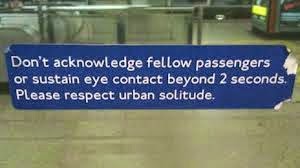
When I walk down the high street in Shaftesbury I nod and say, 'good afternoon', to people. But, like most of us, I sometimes have to go up to London, and go on the Underground, where things are very different. Even though you’re surrounded by hundreds of people there is an unspoken law that you do not talk to strangers and offer a cheery ‘hello’, that you do not even make eye contact.
And while part of this is a response to the pressure of city living, a large part of it is influenced by our modern individualism –everyone lives in their own separate unrelated world.
I was thinking about this as I was preparing the sermon for today, for Trinity Sunday, because I was reading an old book by Frank Sheed, the famous apologist of the mid-20th Century, and he wrote about how he was chatting to a stranger on the London Underground, and I thought that things must have been very different back then!
The person he was talking to was telling him, with great interest and excitement, about all sorts of interesting talks on Catholicism that she had attended, talks organised by the organisation that Frank Sheed himself had set up, ‘The Catholic Evidence Guild’. And she was off to attend a talk that very evening. And so he asked her what the talk was about. And he recalls that at that moment the excitement left her voice, and the joy left her face, but she gritted her teeth and with courage and determination said that she was going to a talk about the Trinity. That, he concluded, must be what people think about the Trinity: something you endure with gritted teeth.
Well, as I said, today is Trinity Sunday. And it falls to me to preach about the Most Holy Trinity! So, what shall I say?
In past years I have preached about what the doctrine of the Trinity tells us about God. He is one, and He is three. He is personal, three loving persons, not just some vague indistinct life-force -He is personal and loving in His very inner life.
This year, however, I'd like to say a few words about what the doctrine of the Trinity tells us about OURSELVES. Let us remember that we are made in the image and likeness of God. And, more specifically, we can note that it is this TRIUNE God in whose image and likeness we have been made. So, if God being Trinity tells us about God, it must also tell us something about ourselves, about what it means to be human.
To return to the London Underground: The Tube is a good symbol of modern living. Our modern world is dominated by a sense of individualism, of being private, and certainly of not talking to random strangers on the Tube! Other people are an intrusion in my space, an intrusion on my rights.
In this individualistic world people obviously realise they don't want to be lonely, but we tend to think of others as of only being of significance to us in as much as we CHOOSE to make them so, choose to have them as friends, choose to relate to them in various ways. Rather than thinking that we are INHERENTLY related in some manner that exists even before we recognise it and choose to acknowledge it.
Let us think of our Triune God again. He is not alone. He exists always as three persons. As our Faith teaches us about Jesus Christ, the one eternal Word, the eternal Son of the Father, "there was never a time when He [the Son] was not". And likewise with the Holy Spirit.
And these three persons exist in an eternal relationship of love. Such that God can never be alone in Himself, never be lonely. Each of those persons is ALWAYS in relationship and HAS ALWAYS BEEN in relationship.
Now, if we are made in that image, then it means that we are not made to be solitary beings. Even the prayerful hermit living in solitude, living in a PHYSICAL isolation, cannot be living in a SPIRITUAL isolation. Rather, the hermit must be loving the world and praying for the people in the world even while withdrawn from it physically.
And, those of us who do not have that rare vocation to be a hermit, we are all the more obviously and directly called, in our very NATURE to love and relate to the people of the world. And, even if we’re not avoiding talking to people on the Tube, we can still be thinking and relating to them as people we are inherently related to: we are all made in the communal interpersonal nature of the one Triune God.
Sunday, 1 June 2014
Ascension Sunday, Year A, Shaftesbury
Mt 28: 16-20
Last week, as you may recall, I indicated that the previous week been pretty heavy for me, that I’d felt like I had the weight of the world on my shoulders.
This week, in contrast, has been one of those weeks where it has felt like all my cares have been lifted away
What was the difference?
I'd like to claim that it was because I'd fully lived my own advice:
i.e that I'd relied in the power of the Holy Spirit, rather than my own power;
I'd handed it all into the hands of Our Lady and entrusted my problems to her
-and I DID do these two things,
but, I don't think I can claim that I did them so whole-heartedly that it had changed my life.
Instead, the change was largely due to external factors -and this is a problem: as long as my happiness depends on such external factors then my happiness is going to be as fickle as the weather -which, in Britain, means that my happiness will be utterly unreliable!
The gospel for today's Mass points us towards the foundation and priority that CHRIST builds for us, and let me note two things.
First, it is oriented to heaven. That was where He was going. That is where He wishes us to be looking too.
Second, let us consider for a moment His PRIORITIES in sending out His Apostles. He had come down from heaven to earth to ‘sort the world out’, so to speak. Now He was at the conclusion of the earthly part of His mission; He had promised to send His Holy Spirit to empower His apostles in their new task, and He was entrusting to them the task of EXTENDING His mission to every corner of the world and every age of history. "All authority... Go therefore…all nations"(Mt 28:18-19)
My point is this (and I won’t claim its my own original insight -I got it from a commentary by Fr John Bartunek LC, in ‘The Better Part’), my point is this:
WHAT Did He send them out to do?
What had His mission of saving the world been all about?
Did He send them out to build better roads and infrastructure? Or to create fairer tax systems?
No, He sent them out to preach and to administer the sacraments, to baptise and teach what He had taught them.
They taught of ‘Emmanuel’ -‘God is with us’, in Jesus Christ;
The sacraments they administered CAUSED God to BE present with us.
This was a very heavenly, OTHER-WORLDLY set of priorities.
Yet, in a way that many would consider ironic, this focus on the OTHER world changed THIS world -made it a better place.
And this holds for ourselves, too, as individuals.
“Seek ye first the Kingdom of God” (Mt 6:33) said Jesus, and those other things will be “added unto you” also.
If that is what we seek FIRST and foremost -like the Apostles being sent PRIMARILY to preach and administer the sacraments, then we will be living a life with a more solid foundation than the ever-fluctuating vagaries of this world.
If my happiness depends on God, on my knowledge that He loves me, and cares for me,
If my joy comes from the daily and even moment-by-moment encounter with Him,
then I will live a more secure happiness.
So that, last week, this week, next week, my mood shouldn't fluctuate like the British weather.
Last week, as you may recall, I indicated that the previous week been pretty heavy for me, that I’d felt like I had the weight of the world on my shoulders.
This week, in contrast, has been one of those weeks where it has felt like all my cares have been lifted away
What was the difference?
I'd like to claim that it was because I'd fully lived my own advice:
i.e that I'd relied in the power of the Holy Spirit, rather than my own power;
I'd handed it all into the hands of Our Lady and entrusted my problems to her
-and I DID do these two things,
but, I don't think I can claim that I did them so whole-heartedly that it had changed my life.
Instead, the change was largely due to external factors -and this is a problem: as long as my happiness depends on such external factors then my happiness is going to be as fickle as the weather -which, in Britain, means that my happiness will be utterly unreliable!
The gospel for today's Mass points us towards the foundation and priority that CHRIST builds for us, and let me note two things.
First, it is oriented to heaven. That was where He was going. That is where He wishes us to be looking too.
Second, let us consider for a moment His PRIORITIES in sending out His Apostles. He had come down from heaven to earth to ‘sort the world out’, so to speak. Now He was at the conclusion of the earthly part of His mission; He had promised to send His Holy Spirit to empower His apostles in their new task, and He was entrusting to them the task of EXTENDING His mission to every corner of the world and every age of history. "All authority... Go therefore…all nations"(Mt 28:18-19)
My point is this (and I won’t claim its my own original insight -I got it from a commentary by Fr John Bartunek LC, in ‘The Better Part’), my point is this:
WHAT Did He send them out to do?
What had His mission of saving the world been all about?
Did He send them out to build better roads and infrastructure? Or to create fairer tax systems?
No, He sent them out to preach and to administer the sacraments, to baptise and teach what He had taught them.
They taught of ‘Emmanuel’ -‘God is with us’, in Jesus Christ;
The sacraments they administered CAUSED God to BE present with us.
This was a very heavenly, OTHER-WORLDLY set of priorities.
Yet, in a way that many would consider ironic, this focus on the OTHER world changed THIS world -made it a better place.
And this holds for ourselves, too, as individuals.
“Seek ye first the Kingdom of God” (Mt 6:33) said Jesus, and those other things will be “added unto you” also.
If that is what we seek FIRST and foremost -like the Apostles being sent PRIMARILY to preach and administer the sacraments, then we will be living a life with a more solid foundation than the ever-fluctuating vagaries of this world.
If my happiness depends on God, on my knowledge that He loves me, and cares for me,
If my joy comes from the daily and even moment-by-moment encounter with Him,
then I will live a more secure happiness.
So that, last week, this week, next week, my mood shouldn't fluctuate like the British weather.
Sunday, 25 May 2014
Litany for Peace and Unity in the Holy Land
In keeping with the request of Cardinal Nichols and others we had a 3-4pm Holy Hour to pray for peace and unity at the very hour when the Pope is greeting Christians in Bethlehem.
For peace in the Holy Land
For a restoration of unity between the Churches.
Cardinal Nichols has asked us to "unite in prayer at the very hour that Pope Francis will visit Christ-ians in Bethlehem on Sunday 25 May between 3pm and 4pm (UK time)… [in] an hour of prayer before the Bless-ed Sacrament". The Cardinal also spoke of the import-ance of supporting the Pope’s mission and of “praying for peace” in the Holy Land. The Pope’s three day visit to the Holy Land begins on Saturday, 24 May – the intense programme includes a visit to Jordan, Palestine and Israel. Pope Francis will encounter the Ecumenical Patriarch Bartholomew in Jerusalem. They will sign a joint declaration and then preside at an ecumenical prayer service at the Basilica of the Holy Sepulchre together with other Christian leaders. About the visit, Chair of the Department for Dialogue and Unity, Arch-bishop Bernard Longley said: “The meeting of Pope Francis later this month in the Holy Land with Ecumenical Patriarch Bartholomew marks a very significant step on the road to Christian unity. This year sees the 50th anniversary of the two great documents of Vatican II on ecumenism and inter-religious relations “Unitatis Redin-tegratio” and “Nostra Aetate… I hope that the Holy Father and Patriarch Bartholomew will draw attention to the struggling Christian communities of the Holy Land. I am delighted that many of our parishes will pray in solidarity with Pope Francis and the Ecumenical Pat-riarch on the afternoon of Sunday 25th May. I am also grateful for all that the Friends of the Holy Land have been doing to highlight this important visit and ecumenical encounter.”
Lord, have mercy - Lord, have mercy
Christ, have mercy - Christ, have mercy
Lord, have mercy - Lord, have mercy
Christ hear us - Christ, graciously hear us
God the Father of heaven, Have mercy on us
God the Son, Redeemer of the world, Have mercy on us
God the Holy Spirit, Have mercy on us
Holy Trinity, One God, Have mercy on us
For the sins preventing peace and unity in the land of Your birth,
Forgive us, Lord
For hatred and division,
Forgive us, Lord
For clinging to past offences,
Forgive us, Lord
For prejudice and racism,
Forgive us, Lord
For tolerance of unjust suffering,
Forgive us, Lord
For our complacency while others suffer,
Forgive us, Lord
To the harmony humanity enjoyed at creation,
Restore us, Lord
To the peace You bestowed on Your Apostles,
Restore us, Lord
To the unity You founded in Your Church,
Restore us, Lord
For peace in the Holy Land,
We ask You, Lord
For an end to bloodshed
We ask You, Lord
For security and stability in Israel,
We ask You, Lord
For justice for the Palestinian people,
We ask You, Lord
For an end to the suffering of Christians in the Middle East,
We ask You, Lord
For an end to religious persecution and intolerance,
We ask You, Lord
For the freedom to worship,
We ask You, Lord
For unity between the Catholic and Orthodox Churches,
We ask You, Lord
For unity with the ecclesial communities of the Reformation,
We ask You, Lord
For unity across for world,
We ask You, Lord
For unity in England,
We ask You, Lord
Lamb of God, who takes away the sins of the world, spare us, O Lord
Lamb of God, who takes away the sins of the world, graciously hear us, O Lord
Lamb of God, who takes away the sins of the world, have mercy on us, O Lord
Let us pray
Priest:
Eternal Father, give to the land of Your Son’s birth that peace that only the Prince of Peace can bring, and restore to His Church that unity for which He prayed. Through Christ our Lord. Amen.
In a dropbox file:
https://www.dropbox.com/s/ny2nj2qwha4mk3c/Litany%20Peace%20and%20Unity%20Holy%20Hour.docx
For peace in the Holy Land
For a restoration of unity between the Churches.
Cardinal Nichols has asked us to "unite in prayer at the very hour that Pope Francis will visit Christ-ians in Bethlehem on Sunday 25 May between 3pm and 4pm (UK time)… [in] an hour of prayer before the Bless-ed Sacrament". The Cardinal also spoke of the import-ance of supporting the Pope’s mission and of “praying for peace” in the Holy Land. The Pope’s three day visit to the Holy Land begins on Saturday, 24 May – the intense programme includes a visit to Jordan, Palestine and Israel. Pope Francis will encounter the Ecumenical Patriarch Bartholomew in Jerusalem. They will sign a joint declaration and then preside at an ecumenical prayer service at the Basilica of the Holy Sepulchre together with other Christian leaders. About the visit, Chair of the Department for Dialogue and Unity, Arch-bishop Bernard Longley said: “The meeting of Pope Francis later this month in the Holy Land with Ecumenical Patriarch Bartholomew marks a very significant step on the road to Christian unity. This year sees the 50th anniversary of the two great documents of Vatican II on ecumenism and inter-religious relations “Unitatis Redin-tegratio” and “Nostra Aetate… I hope that the Holy Father and Patriarch Bartholomew will draw attention to the struggling Christian communities of the Holy Land. I am delighted that many of our parishes will pray in solidarity with Pope Francis and the Ecumenical Pat-riarch on the afternoon of Sunday 25th May. I am also grateful for all that the Friends of the Holy Land have been doing to highlight this important visit and ecumenical encounter.”
Lord, have mercy - Lord, have mercy
Christ, have mercy - Christ, have mercy
Lord, have mercy - Lord, have mercy
Christ hear us - Christ, graciously hear us
God the Father of heaven, Have mercy on us
God the Son, Redeemer of the world, Have mercy on us
God the Holy Spirit, Have mercy on us
Holy Trinity, One God, Have mercy on us
For the sins preventing peace and unity in the land of Your birth,
Forgive us, Lord
For hatred and division,
Forgive us, Lord
For clinging to past offences,
Forgive us, Lord
For prejudice and racism,
Forgive us, Lord
For tolerance of unjust suffering,
Forgive us, Lord
For our complacency while others suffer,
Forgive us, Lord
To the harmony humanity enjoyed at creation,
Restore us, Lord
To the peace You bestowed on Your Apostles,
Restore us, Lord
To the unity You founded in Your Church,
Restore us, Lord
For peace in the Holy Land,
We ask You, Lord
For an end to bloodshed
We ask You, Lord
For security and stability in Israel,
We ask You, Lord
For justice for the Palestinian people,
We ask You, Lord
For an end to the suffering of Christians in the Middle East,
We ask You, Lord
For an end to religious persecution and intolerance,
We ask You, Lord
For the freedom to worship,
We ask You, Lord
For unity between the Catholic and Orthodox Churches,
We ask You, Lord
For unity with the ecclesial communities of the Reformation,
We ask You, Lord
For unity across for world,
We ask You, Lord
For unity in England,
We ask You, Lord
Lamb of God, who takes away the sins of the world, spare us, O Lord
Lamb of God, who takes away the sins of the world, graciously hear us, O Lord
Lamb of God, who takes away the sins of the world, have mercy on us, O Lord
Let us pray
Priest:
Eternal Father, give to the land of Your Son’s birth that peace that only the Prince of Peace can bring, and restore to His Church that unity for which He prayed. Through Christ our Lord. Amen.
In a dropbox file:
https://www.dropbox.com/s/ny2nj2qwha4mk3c/Litany%20Peace%20and%20Unity%20Holy%20Hour.docx
Sunday, 18 May 2014
5th Sunday of Easter, Year A, Shaftesbury
Jn 14:1-12
I want to say a few words about two of our inner yearnings, to ‘go’ and to ‘see’, and about how only Jesus can satisfy these.
Of course, not everybody in life seems to be ‘yearning’. Many people seem to have given up the quest. But even so, there remains an inner restlessness that flows from the fact that we humans are made for something MORE than the mundane realities we find in this world.
And so we repeatedly yearn to 'go' someplace, so like Thomas we ask the ‘way’ (as in today’s Gospel text).
And we yearn to 'see' more, so we ask to be shown, like Philip.
I was reading from Pope Benedict’s book, Jesus of Nazareth, Vol 1, Introduction (he’s the retired pope now, but his book is still worth reading!), and he notes the link between ‘seeing’ and ‘going’ -because when I first read the comment of Thomas and the comment of Philip in today’s Gospel they seemed unrelated –but they’re not.
Pope Benedict starts his comments about Jesus by looking at Moses in the Old Testament. Moses, in the book of Deuteronomy, prophesied that One would come after him -the prophecy of the messiah: “The Lord will raise up for you a prophet like me”(Deut 18:15). This messianic prophecy was repeated and amplified down the centuries, a prophecy of One would HAVE even more fully, and GIVE even more fully, what Moses had had and what Moses had given the people.
What was it that Moses had had?
Friendship with God. This is what we all yearn for, even if we don't realise quite what we are seeking.
We seek the companionship of the One who will satisfy.
The Bible tells us that Moses talked with God, “as a friend speaks with a friend”(Ex 33:11). Wow!
And because Moses knew and ‘saw’ God in this sense He knew the destiny, the goal, the path to lead the People of God towards: the Exodus, the Promised Land etc.
Because he ‘saw’ he therefore knew the path to ‘go’ –so the questions of Thomas and Philip are linked.
But, even the mighty Moses, who led the Children of Israel out of Egypt, who parted the Red Sea, even he did not see God FULLY:
He spoke to God amidst the pillar of cloud, in the Tent of Meeting (Ex 33:10);
But he did not see the “glory” of God’s “face”(Ex 33:23)
–when he asked, he was allow to see the glory of God from behind as the Lord passed, but to see God’s “face” would have been more than he could have endured (Ex 33:20).
Yet, his capacity to the lead the people, his capacity to know where they should ‘go’, stemmed from his familiarity with God, from the extent to which he ‘saw’ the Lord in the cloud.
What of Jesus?
He is the One who has an utterly more profound communion with God,
because the godhead is not something apart from Him,
but is something He is a 'part' of: He is Himself God.
He is Himself the One eternal Son of the Father.
“No one has ever seen God; it is the only Son, who is nearest the Father’s heart, who has made Him known”(Jn 1:18)
To return to today’s gospel text:
“how can we know the way?”, asked Thomas
“let us see the Father”, said Philip
Jesus is the way. Jesus is the face of the Father.
To have ‘seen’ Him is to know the ‘way’ to go. He is the One we are all ‘yearning’ for.
And we recall this is Eastertide because His rising from the dead has proven the truth of His claim.
I want to say a few words about two of our inner yearnings, to ‘go’ and to ‘see’, and about how only Jesus can satisfy these.
Of course, not everybody in life seems to be ‘yearning’. Many people seem to have given up the quest. But even so, there remains an inner restlessness that flows from the fact that we humans are made for something MORE than the mundane realities we find in this world.
And so we repeatedly yearn to 'go' someplace, so like Thomas we ask the ‘way’ (as in today’s Gospel text).
And we yearn to 'see' more, so we ask to be shown, like Philip.
I was reading from Pope Benedict’s book, Jesus of Nazareth, Vol 1, Introduction (he’s the retired pope now, but his book is still worth reading!), and he notes the link between ‘seeing’ and ‘going’ -because when I first read the comment of Thomas and the comment of Philip in today’s Gospel they seemed unrelated –but they’re not.
Pope Benedict starts his comments about Jesus by looking at Moses in the Old Testament. Moses, in the book of Deuteronomy, prophesied that One would come after him -the prophecy of the messiah: “The Lord will raise up for you a prophet like me”(Deut 18:15). This messianic prophecy was repeated and amplified down the centuries, a prophecy of One would HAVE even more fully, and GIVE even more fully, what Moses had had and what Moses had given the people.
What was it that Moses had had?
Friendship with God. This is what we all yearn for, even if we don't realise quite what we are seeking.
We seek the companionship of the One who will satisfy.
The Bible tells us that Moses talked with God, “as a friend speaks with a friend”(Ex 33:11). Wow!
And because Moses knew and ‘saw’ God in this sense He knew the destiny, the goal, the path to lead the People of God towards: the Exodus, the Promised Land etc.
Because he ‘saw’ he therefore knew the path to ‘go’ –so the questions of Thomas and Philip are linked.
But, even the mighty Moses, who led the Children of Israel out of Egypt, who parted the Red Sea, even he did not see God FULLY:
He spoke to God amidst the pillar of cloud, in the Tent of Meeting (Ex 33:10);
But he did not see the “glory” of God’s “face”(Ex 33:23)
–when he asked, he was allow to see the glory of God from behind as the Lord passed, but to see God’s “face” would have been more than he could have endured (Ex 33:20).
Yet, his capacity to the lead the people, his capacity to know where they should ‘go’, stemmed from his familiarity with God, from the extent to which he ‘saw’ the Lord in the cloud.
What of Jesus?
He is the One who has an utterly more profound communion with God,
because the godhead is not something apart from Him,
but is something He is a 'part' of: He is Himself God.
He is Himself the One eternal Son of the Father.
“No one has ever seen God; it is the only Son, who is nearest the Father’s heart, who has made Him known”(Jn 1:18)
To return to today’s gospel text:
“how can we know the way?”, asked Thomas
“let us see the Father”, said Philip
Jesus is the way. Jesus is the face of the Father.
To have ‘seen’ Him is to know the ‘way’ to go. He is the One we are all ‘yearning’ for.
And we recall this is Eastertide because His rising from the dead has proven the truth of His claim.
Sunday, 11 May 2014
4th Sunday of Easter, Vocations Sunday, Shaftesbury
I'm not going to say much now because two holy Dominican Sisters (from the New Forest priory) are going to speak to you at the end of Mass and I'd like you to save your attention for them.
Today is the worldwide day of prayer for vocations.
We tend to think of this as vocations to the priesthood, which is its initial focus, being always on 'Good Shepherd Sunday', the 4th Sunday of Easter.
But the simple point I want to make to you now is that one of the ways that God cares for and shepherds His Church is through vocations to 'Religious Life', to monks, nuns, and religious sisters and brothers.
This has taken a wide variety of forms through the Church's history:
We read of the order of widows that St Paul speaks in his epistles,
We know of hermits like St Anthony in the desert,
And of monks like St Benedict in abbey communities,
And nuns like St Scholastica.
And we know they did a wide variety of different apostolates:
Enclosed contemplatives in prayer like St Clare,
& Active caring for the poor and destitute like Mother Teresa of Calcutta.
As you know, for some decades there was a great crisis in Religious Life in the 1960s onwards, and many left.
But you may be less aware of the fact that there has also been a great renewal and revival, and the sisters speaking to us at the end of Mass today are a part of that:
A new congregation, doing a slightly new apostolate,
But part of an old and eternal thing in the life of the Church: 'Religious Life'
-one of ways Christ still shepherds His Church today.
Here is a photo of Sr Mary Catherine OP, speaking at the end of Mass today:

Here is a photo of Sr Mary Benedicta OP and Sr Mary Catherine OP in the hall after Mass, over tea and coffee, with Fr Dylan:


Fr Dylan showing the two sisters Gold Hill in Shaftesbury, the 'must see' sight for every visitor:


Today is the worldwide day of prayer for vocations.
We tend to think of this as vocations to the priesthood, which is its initial focus, being always on 'Good Shepherd Sunday', the 4th Sunday of Easter.
But the simple point I want to make to you now is that one of the ways that God cares for and shepherds His Church is through vocations to 'Religious Life', to monks, nuns, and religious sisters and brothers.
This has taken a wide variety of forms through the Church's history:
We read of the order of widows that St Paul speaks in his epistles,
We know of hermits like St Anthony in the desert,
And of monks like St Benedict in abbey communities,
And nuns like St Scholastica.
And we know they did a wide variety of different apostolates:
Enclosed contemplatives in prayer like St Clare,
& Active caring for the poor and destitute like Mother Teresa of Calcutta.
As you know, for some decades there was a great crisis in Religious Life in the 1960s onwards, and many left.
But you may be less aware of the fact that there has also been a great renewal and revival, and the sisters speaking to us at the end of Mass today are a part of that:
A new congregation, doing a slightly new apostolate,
But part of an old and eternal thing in the life of the Church: 'Religious Life'
-one of ways Christ still shepherds His Church today.
Here is a photo of Sr Mary Catherine OP, speaking at the end of Mass today:
Here is a photo of Sr Mary Benedicta OP and Sr Mary Catherine OP in the hall after Mass, over tea and coffee, with Fr Dylan:
Fr Dylan showing the two sisters Gold Hill in Shaftesbury, the 'must see' sight for every visitor:
Subscribe to:
Posts (Atom)